Many organizations once treated cyber security as a technical problem solved by a handful of tools. Today, Ottawa businesses are realizing that effective protection requires far more. Modern cyber security services Ottawa organizations rely on must go beyondfirewalls and antivirus software to address evolving threats, hybrid work environments, and sophisticated cyber attacks. That traditional “defense” mindset assumed threats would mostly come from the outside and that once we built a strong perimeter, we were safe.
Today, that assumption no longer holds. Attackers use automation, social engineering, and advanced tools to bypass static defenses, and hybrid work has blurred the lines between “inside” and “outside” the network. That is why more organizations are looking for cyber security services in Ottawa that focus on resilience rather than a one-time defensive setup. Resilience means preparing for attacks, detecting them quickly, responding effectively, and recovering with minimal impact on operations.
The shift is not theoretical. Industry data shows the average cost of a data breach now exceeds 4 million dollars globally, with small and mid-sized organizations experiencing significant operational downtime. Organizations that implement continuous monitoring and managed detection reduce breach containment time by as much as 30 to 40 percent compared to reactive models. For Ottawa businesses, resilience is not just about prevention; it is about minimizing financial impact and downtime when incidents occur.
The modern workplace is no longer defined by office walls. Employees access systems from home networks, shared workspaces, mobile devices, and cloud platforms across multiple regions. This mobility increases productivity, but it also expands the attack surface dramatically.
Every remote login, unmanaged endpoint, and third-party cloud integration becomes part of your security perimeter. Resilience must reflect that distributed reality. Many Ottawa organizations, including professional services firms, healthcare providers, and government contractors, face increasing regulatory obligations under PIPEDA and industry compliance frameworks. Cyber resilience is essential to meeting these requirements.
As a technology partner, we see this shift as essential. Organizations increasingly rely on cyber security services in Ottawa to move from reactive defenses toward proactive monitoring, threat detection, and resilience planning. Cybersecurity can no longer be a product; it has to be an ongoing strategy that involves people, processes, and technology working together.
Why Cyber Security Services in Ottawa Must Move Beyond Traditional Defense
Traditional cyber defense models typically rely on:
- Perimeter firewalls
- Signature-based antivirus
- Periodic security audits
- Standalone VPNs for remote access
- Intrusion detection systems (IDS) focused mainly on network traffic
- Manual patch management and periodic system updates
- Email spam filters designed to catch basic phishing attempts
- Endpoint protection tools that rely primarily on known threat signatures
This challenge is amplified in modern workplaces where employees work remotely, travel frequently, and access systems from personal or mobile devices. Laptops move between networks, cloud applications replace on-premise systems, and sensitive data is accessed well beyond office environments. In this reality, security models built around fixed locations and static perimeters can no longer provide adequate protection.
These measures are still necessary, but they are far from sufficient on their own. Attackers now exploit human error through phishing, compromised credentials, and business email compromise. Cloud applications, third-party integrations, and remote endpoints create new pathways into your environment that static tools might never see.
We regularly meet organizations that have invested in multiple security tools but still feel exposed because those tools are not integrated, monitored, or aligned with a clear response plan. Cyber resilience addresses that gap by asking not only “How do we block attacks?” but also “How do we continue operating when defenses are breached?”
Traditional detection and response models are being outpaced by AI-enabled attacks that move faster than human teams can react. Gartner has repeatedly emphasized that reactive security models are insufficient in environments where threats are automated and adaptive. In its recent forward-looking projections, Gartner notes that organizations investing in predictive and AI-driven security controls are significantly better positioned to reduce breach impact and response time. The trend is clear: security spending is shifting from perimeter defense toward continuous monitoring, automated threat detection, and proactive risk mitigation.
This reinforces a critical reality for Ottawa businesses: waiting for an alert is no longer enough. Security strategies must anticipate threats before damage occurs.
What Cyber Security Services in Ottawa Should Deliver Today
Cyber resilience is the ability to anticipate, withstand, recover from, and adapt to cyber incidents. For local organizations partnering with us for cyber security services in Ottawa, that typically includes:
- Continuous monitoring of networks, endpoints, and cloud environments to detect suspicious activity and respond quickly to emerging threats
- Network and information security controls designed to safeguard business data from unauthorized access, fraud, and cyber intrusions
- Structured incident response playbooks and communication protocols to ensure teams know exactly how to react during a security event
- Regular data backup and disaster recovery planning, including testing procedures that ensure critical systems can be restored quickly after disruptions
- Ongoing risk assessments and security posture evaluations to identify vulnerabilities across infrastructure, applications, and user access points
- Employee cybersecurity awareness and training programs to reduce phishing risks, credential misuse, and social engineering attacks
- Secure cloud services and infrastructure protection that support modern hybrid work environments and distributed teams
- Network management and IT infrastructure security to maintain stable, protected systems that support daily operations
- Integrated IT support and consulting services that align cybersecurity strategy with overall business technology planning
At Microsys, cybersecurity is delivered as part of a broader managed IT strategy. Our approach combines network security, cloud services, IT infrastructure management, software development, and disaster recovery solutions to ensure businesses remain protected while maintaining operational efficiency.
By integrating cybersecurity into day-to-day IT operations, organizations gain stronger protection against threats, improved business continuity, and the confidence to scale securely in an increasingly digital environment.
With more than two decades of experience supporting Canadian organizations, Microsys combines managed IT, security operations expertise, and structured risk management frameworks to deliver measurable protection outcomes. Our certified specialists design security programs aligned with recognized standards and real-world operational demands, ensuring resilience strategies are practical, scalable, and sustainable.
This move toward resilience is also changing how organizations invest in security. Businesses are no longer focused on individual tools alone; they are prioritizing outcomes. IDC reports that global security spending is expected to grow by more than 12 percent in 2025, with security services ranking among the fastest-growing segments. This growth reflects a clear shift toward managed and continuously operated security programs, where expert teams monitor, adapt, and respond as threats evolve. For many organizations, resilience now means having access to specialized expertise and scalable services rather than managing fragmented solutions internally.
Instead of a one-time project, resilience is a cycle. We assess risks, implement controls, monitor activity, and refine our approach as new threats and technologies emerge. This mindset is especially important for organizations that handle sensitive client data, financial information, or intellectual property.
The Business Impact of Modern Cyber Security Services
Organizations investing in managed security programs are seeing measurable results:
- Companies using managed detection and response reduce breach containment time by up to 40%
- Continuous monitoring can reduce ransomware dwell time by over 50%
- Organizations implementing layered security reduce successful phishing attacks by 70%
These metrics highlight why businesses increasingly turn to cyber security services in Ottawa to strengthen operational resilience.
How Ottawa Cyber Security Services Build a Layered, Managed Security Stack
Resilience starts with the right technical foundation, but it does not end there. On the technology side, we typically help clients implement a layered stack that can include:
- Next-generation firewalls with integrated intrusion prevention to block malicious traffic and unauthorized access attempts
- Endpoint Detection and Response (EDR) protection across laptops, servers, and mobile devices to identify and contain threats in real time
- Advanced email security with phishing detection and malicious attachment filtering
- Multi-factor authentication (MFA) and secure identity management to protect user access and sensitive systems
- Centralized logging and continuous monitoring through a Security Operations Centre (SOC) for faster threat detection and response
- Encrypted, versioned backups stored securely offsite or in the cloud to support rapid disaster recovery and business continuity
- Structured cybersecurity planning and governance frameworks developed jointly by business leadership and the Microsys security consulting team
- Clearly defined incident response procedures and escalation protocols to ensure coordinated action during security events
- Organization-wide cybersecurity awareness training and phishing simulation campaigns to strengthen employee vigilance against social engineering attacks
- Regular security solution updates, patch management, and technology upgrades to ensure protection against evolving cyber threats
- Continuous vulnerability assessments and risk reviews to identify emerging security gaps across infrastructure and applications
What makes this approach effective is not just the technology itself, but how it is designed, configured, and managed. Our security specialists conduct structured risk assessments to identify real exposure points, not theoretical ones. We evaluate endpoint configurations, identity controls, backup integrity, cloud permissions, and user behaviour patterns to uncover gaps that traditional audits often miss.
From there, we design layered protection strategies tailored to each organization’s operational reality. Controls are mapped directly to regulatory requirements, business continuity objectives, and internal workflows, ensuring security strengthens productivity rather than disrupting it.
On its own, this stack is powerful. However, the real value comes when these components are monitored and managed as part of a coordinated service. That is why many organizations choose a managed model, where our team watches for anomalies, investigates alerts, and takes action when needed rather than asking internal staff to manage everything on top of their day jobs.
The Human Element: Turning Staff into a Resilient First Line of Defense
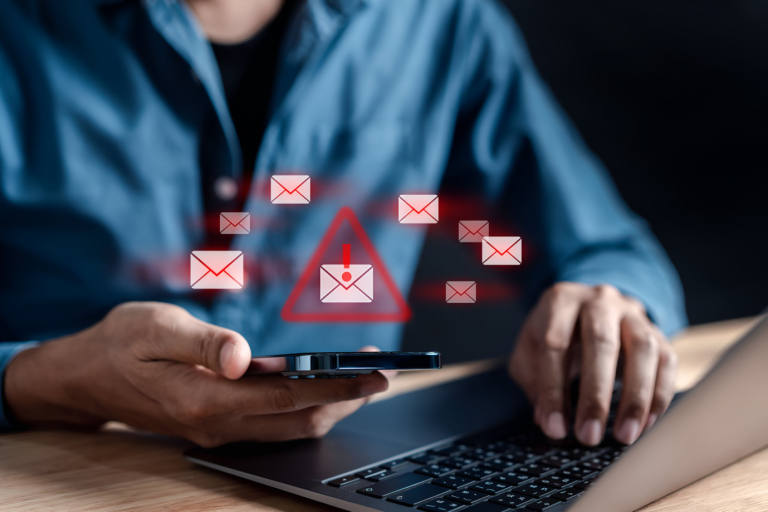
Technology cannot compensate for untrained or unaware users. In a mobile-first environment, employees effectively operate as remote nodes of your network. Each device, login session, and cloud application access point introduces potential exposure. That is why resilience must extend beyond firewalls into identity management, endpoint monitoring, and behavioural analysis across remote environments. With employees accessing systems from home offices, shared workspaces, and mobile devices, individual awareness plays a critical role in preventing unauthorized access and data exposure. Many incidents still begin with a single click on a malicious link or the reuse of weak passwords across multiple accounts. That is why we consider employees an integral part of any resilient security strategy.
For our clients using cyber security services in Ottawa, we design ongoing security awareness programs that include:
- Simulated phishing campaigns and follow-up training
- Role-specific education for executives, finance teams, and IT staff
- Practical guidance on password hygiene, data handling, and remote work practices
- Clear, simple reporting channels for suspicious emails or activity
Our goal is not to scare staff, but to equip them. When employees understand how attacks work and feel confident reporting concerns, the organization gains dozens or hundreds of additional “sensors” across the business. That dramatically reduces the time between an attacker’s first move and our team’s response.
Predictive Monitoring and Managed Threat Response
Resilience also depends on how quickly we can detect and contain suspicious behaviour. Modern attackers often move quietly within a network, escalating privileges and exploring systems before launching a visible attack like ransomware.
To meet that challenge, we combine monitoring tools with managed threat response services. That includes:
- Baseline behaviour analysis to spot unusual logins or data access
- Automated alerting for suspicious activities, such as failed login bursts or large outbound data transfers
- Rapid isolation of compromised endpoints
- Coordinated response between our SOC team and your leadership
Instead of discovering an attack when systems are already locked or data has been exfiltrated, we aim to detect early warning signs and act before damage is done. This is where managed services offer a clear advantage over ad-hoc security tools.
Organizations using managed detection and response services typically reduce incident response time from days to hours. Faster detection directly correlates with lower recovery costs and reduced operational disruption. Continuous monitoring also significantly decreases dwell time, which is a key factor in limiting data loss and ransomware spread.
Behind these capabilities is a dedicated security operations team that continuously reviews alerts, correlates behavioural anomalies, and initiates containment protocols when suspicious activity is detected. This significantly reduces response time and removes the burden from internal IT teams who may not have 24/7 security oversight. As an experienced Ottawa cybersecurity company, Microsys provides managed IT security in Ottawa with 24/7 monitoring and rapid containment protocols.
Instead of reacting after damage is done, our experts focus on early detection, guided response, and coordinated recovery.
🔎 Concerned about your current security posture?
Schedule a free cyber resilience assessment for your Ottawa business and identify hidden risks before attackers do.
Integrating Cyber Resilience into Business Planning
A resilient strategy should be visible in your broader business plans, not just in IT documentation. Recovery planning must account for distributed teams and cloud-based workloads. Testing backups solely within office networks is no longer sufficient. Organizations must ensure that systems can be restored securely and accessed from anywhere without compromising protection.
The financial implications of cyber incidents are no longer theoretical. Industry research consistently shows that breach costs continue to rise year over year, driven by downtime, regulatory penalties, reputational damage, and recovery expenses. Organizations that implement resilience-driven monitoring and rapid containment strategies consistently report faster recovery times and lower overall impact compared to those relying solely on static defenses.
Businesses that formally define recovery time objectives and regularly test backup restoration processes experience up to 50 percent faster system recovery during disruption events. Structured testing removes uncertainty and ensures that business continuity plans work in practice, not just on paper.
For leadership teams, the question is no longer “Can we prevent every attack?” but “How quickly can we detect, contain, and recover?”
We encourage clients to:
- Include cyber risk in overall risk registers and board discussions
- Align disaster recovery and business continuity plans with security scenarios
- Set clear recovery time objectives (RTOs) and recovery point objectives (RPOs)
- Review contracts and third-party relationships for security requirements
When security and resilience are part of everyday planning, leadership is better prepared to make trade-offs and investments that protect the organization over the long term. Our role is to provide the technical and practical insight that supports those decisions.
Moving from Defense to Resilience with Microsys
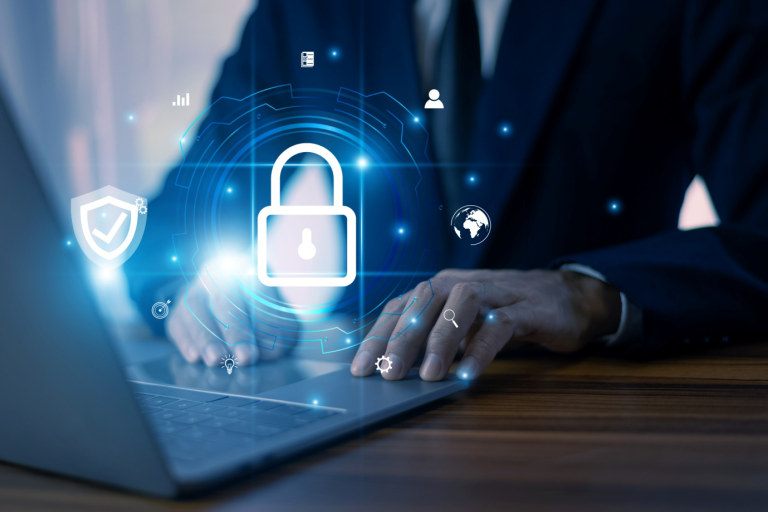
The threat landscape will continue to evolve, whether we are ready or not. Relying solely on traditional defenses is no longer enough to protect critical systems, data, and client trust. The organizations that will thrive are those that treat cybersecurity as an ongoing discipline and cyber resilience as a shared responsibility.
Our experts work closely with leadership and internal IT teams to translate security risks into clear priorities, practical roadmaps, and continuous improvement plans that align security with business objectives.
By partnering with us for cyber security services in Ottawa, you gain more than tools. You gain a team that helps you monitor, detect, respond, and recover while building a culture where security is understood, embraced, and continuously improved. We work with you to design layered protection, train your staff, and integrate resilience into your business strategy so that a single incident does not derail your operations.
Organizations partnering with Microsys gain:
- Dedicated security oversight aligned with business priorities
- Continuous monitoring and managed detection and response
- Structured incident response planning and tabletop exercises
- Secure cloud and hybrid infrastructure design
- Ongoing user awareness training tailored to evolving threats
Our role extends beyond technical implementation; we help leadership translate cyber risk into structured priorities that protect operations, reputation, and long-term growth.
If you are ready to move beyond static cyber defense and adopt a resilience-first approach, we can help you take the next step. Our team brings decades of experience in managed security, IT infrastructure, and risk management to organizations across Ottawa and the wider region.
For over 20 years, Microsys has supported Canadian organizations with managed security, infrastructure modernization, and structured risk management programs. Our team combines advanced monitoring platforms, state-of-the-art security tools, and dedicated security operations expertise to deliver continuous protection rather than one-time fixes.
If your organization is evaluating cyber security services in Ottawa, the question is no longer whether an attack will occur, but how prepared you are to respond. Partner with Microsys, a trusted Ottawa cybersecurity company, to implement a resilience-driven security strategy built for long-term protection.