If you’re looking into Cyber Security services in Richmond Hill, it’s likely because email already feels like the weakest link in your business. And you’re not wrong. For most small and mid-sized teams, the inbox is where real-world attacks start: a rushed approval, a “quick” link click, a fake vendor invoice, or a message that looks like it came from someone you trust.
At Microsys, we see email-based attacks becoming more targeted, more convincing, and harder to catch with basic awareness alone. Email remains the entry point for over 90% of cyber incidents globally. Business email compromise (BEC) scams alone account for billions in annual losses, and small-to-mid-sized businesses are increasingly targeted because attackers assume fewer controls are in place. In our experience supporting Richmond Hill organizations, compromised credentials are responsible for the majority of email-related security incidents we investigate.
The good news is that most inbox threats follow patterns. Once you know what to look for (and put the right controls in place), you can reduce risk without slowing down your day-to-day work.
Below are three modern inbox threats we’re seeing more often and what we do to help Richmond Hill businesses defend against them.
1) Thread hijacking: when the email looks real because it is real
Thread hijacking is one of the most damaging email threats because it doesn’t start with a random message. Instead, attackers gain access to a real mailbox (often through stolen credentials), then jump into an existing email chain. The result is a message that:
- appears in the same thread you’ve been replying to
- uses the same tone and context
- references real projects, invoices, or ongoing conversations
- comes from a legitimate account (or a convincingly spoofed one)
This is how payment redirection scams happen. A vendor’s banking details “change.” A director urgently requests a transfer. A client asks you to “review” a document that looks familiar.
How we help reduce the risk:
- Enforce multi-factor authentication across all accounts
- Monitor sign-ins for unusual locations, devices, and behaviour
- Limit what compromised accounts can access through least-privilege rules
- Set alerts for suspicious forwarding rules and mailbox changes
2) QR phishing: the attack that bypasses “link awareness.”
A lot of people have been trained to hover over links and look for strange URLs. QR phishing avoids that habit entirely.
Attackers send emails with QR codes that appear to be:
- password reset requests
- shared documents
- secure messages
- payroll or HR portals
- invoices and delivery confirmations
The employee scans the QR code on their phone, lands on a fake login page, and enters credentials. Now the attacker has access without the user ever clicking a link on their work device.
How we help reduce the risk:
- Strengthen identity protection so stolen passwords alone don’t grant access
- Add conditional access controls (e.g., block risky logins, require verified devices)
- Train staff to treat QR codes like links: verify the sender and context before scanning
- Deploy email filtering that can detect and quarantine QR-based attacks
3) Vendor spoofing: when “accounts@vendor.com” isn’t actually your vendor
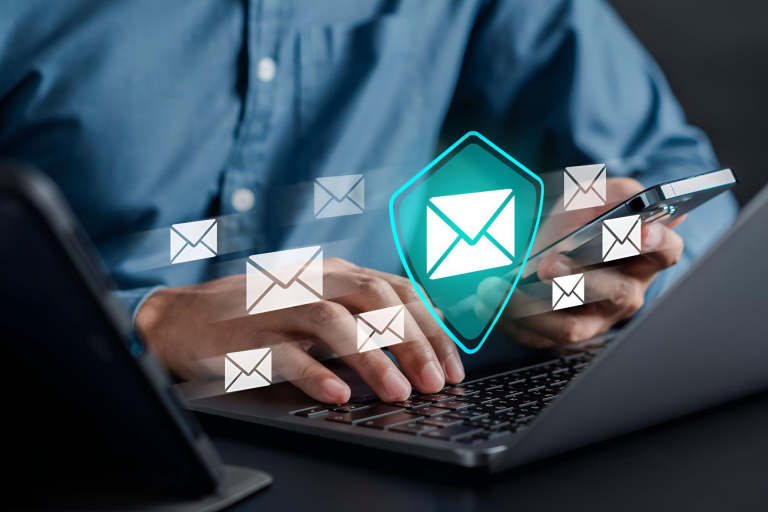
Vendor spoofing is especially common for businesses that process invoices, manage purchase orders, or handle supplier payments. Attackers register lookalike domains (or manipulate display names) to impersonate vendors, then request:
- urgent invoice settlement
- updated banking information
- “re-sent” invoices with different payment details
- payment confirmation links
- purchase approvals for high-value items
Even one successful spoofed payment can cost more than a year of proactive protection. Organizations that implement structured payment verification and email authentication controls can reduce successful vendor payment fraud attempts by over 70%, while significantly improving audit traceability and internal control compliance.
How we help reduce the risk:
- Implement email authentication controls (SPF, DKIM, and DMARC)
- Create vendor payment verification steps (especially for bank detail changes)
- Set approval workflows that require secondary confirmation for high-risk payments
- Use monitoring and reporting to spot repeat targeting attempts
Microsys has been supporting Canadian businesses for more than 20 years, delivering managed security, risk assessments, and compliance-focused IT solutions. Our team works with organizations across industries to implement layered protection, real-time monitoring, and incident response strategies that reduce risk without disrupting operations.
A practical inbox defence plan for Richmond Hill SMBs
The goal isn’t to make email painful. The goal is to make it safer without adding unnecessary friction. Here’s the approach we typically recommend:
- Lock down identity
- MFA, stronger password policies, and risk-based login controls.
- Harden the inbox
- Email filtering, attachment scanning, and protections that catch new attack patterns.
- Train teams with real examples
- Not generic phishing awareness, but training built around the real scenarios your staff actually face.
- Monitor and respond quickly
- Because speed matters: the sooner you detect a compromised account, the smaller the impact.
Inbox threats aren’t just “IT problems.” They impact finance, operations, vendor trust, and business continuity, especially for growing businesses in Richmond Hill that rely heavily on email to move work forward.
As a trusted Richmond Hill IT partner, Microsys combines two decades of experience with advanced monitoring tools, structured security frameworks, and hands-on support to reduce email risk in a way that aligns with real business workflows. We focus on strengthening identity, securing inboxes, protecting endpoints, and implementing advanced solutions such as SOC monitoring, EDR, and MDR to detect and respond to threats quickly without turning every message into a slowdown.
With local expertise, hands-on support, and security solutions designed around real workflows, Microsys helps Richmond Hill businesses keep email safe, reliable, and out of the way of daily operations.
To see how we support local organisations, explore our Cyber Security services, and read our guide to detecting and avoiding phishing emails. Contact us today to learn more. If you want to reduce inbox risk, strengthen identity controls, and gain faster threat detection without slowing your team down, schedule a security risk review with our team and see where your current protections can be strengthened.