Organizations investing in cybersecurity services in Mississauga are facing a threat landscape that looks very different from even two years ago. Traditional phishing emails and basic malware attacks have evolved into AI-driven campaigns capable of impersonating executives, bypassing identity checks, and exploiting employees with alarming accuracy. For Canadian SMBs, the issue is no longer whether cyber threats exist. The issue is whether the organization can detect and contain them before operational, financial, and reputational damage occurs.
In 2026, attackers are combining generative AI, automation, and social engineering to target businesses that lack layered cybersecurity controls. Deepfake-enabled executive fraud, AI-generated phishing campaigns, and insider-driven data exposure are now real operational risks for finance teams, HR departments, and executive leadership.
At Microsys, we help organizations strengthen resilience through layered cybersecurity services, proactive monitoring, identity governance, and strategic IT oversight. As a trusted managed IT services provider, our role extends beyond incident response. We help Canadian businesses build operationally mature security environments designed for long-term risk reduction.
Why Cybersecurity Services in Mississauga Are Becoming a Board-Level Priority
Cybersecurity has shifted from an IT issue to a business governance issue.
For businesses operating in Mississauga’s large commercial and industrial environment, including organizations in manufacturing, logistics, distribution, and professional services, a cyber incident can quickly affect interconnected systems, payment workflows, employees, vendors, and customers.
Finance leaders, operations executives, and ownership groups now recognize that a successful cyberattack can:
- Disrupt operations
- Freeze revenue-generating systems
- Damage client trust
- Trigger regulatory exposure
- Delay payroll and vendor payments
- Create legal and insurance complications
The increasing use of AI by attackers is accelerating this pressure.
According to Gartner analysts at the 2025 Security & Risk Management Summit, attackers are increasingly using deepfakes to bypass automated voice biometrics and identity verification systems. Gartner specifically highlighted the growing use of executive impersonation to initiate fraudulent money transfers and manipulate employees through AI-enhanced social engineering.
Statistics Canada reported that about one in six Canadian businesses, or 16%, experienced cybersecurity incidents in 2023. While that proportion declined from previous survey years, business spending on recovery reached approximately $1.2 billion, twice the amount reported in 2021.
For SMBs, these threats are particularly dangerous because many organizations still rely on informal approval workflows, manual payment verification, and fragmented identity controls.
How AI-Powered Phishing Is Changing the Cybersecurity Threat Landscape
Traditional phishing emails were often identifiable through spelling mistakes, poor formatting, or suspicious wording. AI-generated phishing campaigns have removed many of those warning signs.
Modern phishing attacks now:
- Mimic internal communication styles
- Personalize messaging using public data
- Replicate executive tone and language
- Generate convincing fake invoices
- Create context-aware follow-ups
- Scale rapidly across departments
Attackers are also using AI to improve timing and targeting. Finance teams during month-end close, HR departments during onboarding cycles, and procurement staff handling urgent vendor payments are increasingly targeted because attackers know operational pressure reduces scrutiny.
The Canadian Centre for Cyber Security’s National Cyber Threat Assessment 2025–2026 reinforces this concern. The federal cybersecurity authority reports that generative AI is lowering barriers to malicious cyber activity by enabling threat actors to create personalized phishing messages at greater scale and with more convincing, grammatically correct language. These AI-generated messages can imitate natural writing styles, making fraudulent communications more difficult for employees to recognize and filter.
Organizations without structured cybersecurity awareness training often struggle to detect these newer attack methods.
This is why layered protection matters. Effective cybersecurity services in Mississauga now require:
- Email threat filtering
- Endpoint monitoring
- Multi-factor authentication
- Identity governance
- Security awareness training
- Managed detection and response (MDR)
- Structured escalation procedures
Technology alone is no longer enough. Employees must also understand how AI-driven attacks operate.
Deepfake CFO Fraud Is Becoming a Real Financial Risk
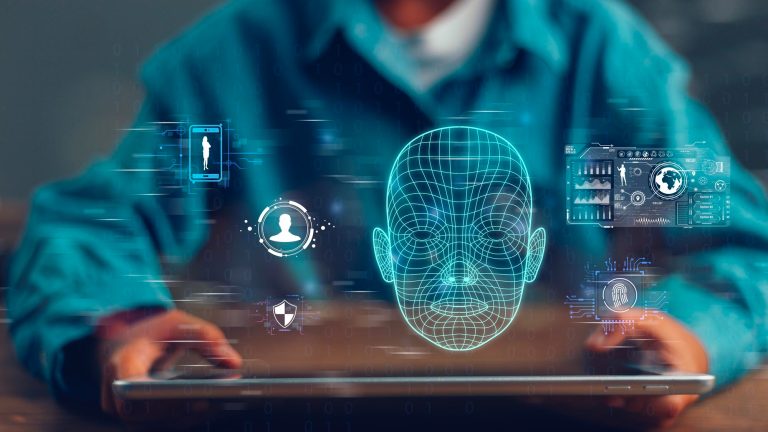
Deepfake-enabled fraud has become one of the fastest-growing threats facing finance teams. Attackers can now generate synthetic voice and video impersonations convincing enough to:
- Request wire transfers
- Approve fraudulent invoices
- Reset credentials
- Authorize vendor changes
- Manipulate internal approvals
Many organizations still rely on verbal confirmation processes that were designed for a pre-AI threat environment. In practice, this means a finance employee may receive:
- A phone call that sounds like the CFO
- A Teams or Zoom message appearing to come from leadership
- A voicemail requesting urgent payment action
- AI-generated voice instructions bypassing standard controls
Without structured approval governance, these attacks can succeed surprisingly quickly. Organizations reducing this risk are implementing:
- Dual approval workflows
- Identity verification controls
- Conditional access policies
- Segregation of financial authority
- Secure payment validation procedures
- Continuous monitoring through a managed IT services provider
Finance leaders increasingly recognize that cybersecurity is directly connected to operational governance and financial control.
Concerned about AI-powered phishing or executive impersonation risks?
Schedule a cybersecurity assessment with Microsys to identify gaps in your current security controls and response procedures.
Why Insider Risk Is Rising Across Canadian SMBs
Not every security incident starts outside the organization.
Insider risk continues to grow as businesses navigate:
- Hybrid work environments
- Employee turnover
- Contractor access
- Third-party integrations
- Cloud file sharing
- Remote device usage
Insider threats are not always malicious. Many incidents result from:
- Excessive permissions
- Poor offboarding controls
- Unsecured file sharing
- Credential misuse
- Inconsistent access reviews
Organizations with fragmented systems often lack visibility into who has access to sensitive information and whether that access still aligns with operational responsibilities.
How Layered Cybersecurity Services Reduce Business Risk
The organizations responding most effectively to modern cyber threats are building layered cybersecurity environments rather than relying on isolated tools.
A mature security framework includes:
- IT security infrastructure assessments
- Vulnerability assessment and penetration testing
- Firewall and network security reviews
- Phishing simulation testing
- Security awareness training
- Network and infrastructure monitoring
- Backup and data integrity management
- Security configuration reviews
This is where working with an experienced managed IT services provider becomes essential.
For Mississauga businesses managing cloud platforms, remote users, financial systems, and connected infrastructure, this layered approach helps bring security controls and day-to-day IT governance under a more coordinated strategy.
Microsys helps organizations align:
- Infrastructure governance
- User access management
- Cybersecurity monitoring
- ERP and financial system protection
- Business continuity planning
- Compliance readiness
For organizations using ERP environments such as Sage Intacct and Sage 300, cybersecurity becomes even more critical. Financial systems, vendor payment workflows, and operational reporting all represent high-value attack surfaces.
As a trusted Sage consultant, Microsys helps businesses align ERP governance with cybersecurity strategy to reduce operational exposure while improving visibility and control.
Why AI Is Both the Threat and the Defense
AI is changing how cyber threats are created and detected, but technology alone does not create resilience. The Canadian Centre for Cyber Security warns that threat actors are already using AI to improve social engineering, personalize phishing at scale, and create realistic impersonations. Businesses therefore need security controls supported by clear processes, employee awareness, access governance, monitoring, and defined escalation procedures.
Build a Cybersecurity Strategy Designed for the 2026 Threat Environment
Cyber threats are evolving faster than traditional security models were designed to handle. AI-powered phishing, deepfake fraud, and insider risk are no longer emerging concerns. They are operational realities affecting Canadian SMBs right now.
Microsys helps organizations strengthen resilience through layered cybersecurity services in Mississauga, proactive monitoring, identity governance, and long-term IT strategy alignment.
With more than 20 years of experience supporting Canadian businesses, our team combines cybersecurity expertise, ERP governance, and managed IT oversight to help organizations reduce operational risk while improving visibility and control.
Book a cybersecurity assessment with Microsys to evaluate your current security posture, identify operational vulnerabilities, and strengthen your organization against AI-driven cyber threats in 2026.