
In today’s fast-moving economy, gut feelings and reactive decisions are no longer enough. Companies that succeed are those that rely on data-driven strategies, and one of the most powerful tools enabling this shift is predictive analytics for business. By using historical data, advanced algorithms, and machine learning, predictive analytics empowers leadership teams to anticipate trends, identify risks, and act proactively instead of reactively.
For Canadian SMEs, the potential impact is huge. Whether it’s anticipating seasonal demand, improving cash flow forecasting, or identifying workforce gaps, predictive analytics gives organizations the ability to make smarter, more confident decisions. What once was the domain of large enterprises is now accessible through cloud-based ERP solutions, custom software, and BI dashboards.
In this article, we’ll explore what predictive analytics is, how it works, and the practical ways it can strengthen decision-making for finance, operations, and leadership teams across industries.
1. What Is Predictive Analytics?
At its core, predictive analytics combines three critical components: historical data, statistical algorithms, and machine learning models. While descriptive analytics explains what happened, predictive analytics projects what is likely to happen next. For example, a retailer may use past sales data and economic trends to predict holiday demand, while a financial controller may use cash flow data to forecast liquidity challenges.
The strength of predictive analytics lies in its versatility. It can be applied to customer behavior, inventory levels, financial health, or workforce management. By identifying patterns that humans alone might miss, predictive analytics transforms raw data into actionable insights.
For leadership teams, this isn’t just about better reporting; it’s about turning foresight into a competitive advantage. Businesses can make informed strategic decisions, allocate resources more efficiently, and mitigate risks before they escalate. This forward-looking approach is why predictive analytics for business has become a cornerstone of digital transformation strategies for small, mid-sized, and enterprise organizations alike.
2.How Predictive Analytics Works
Predictive analytics depends on quality data. That data typically comes from systems businesses already use daily: ERP platforms, CRM systems, HR applications, and financial records. The process involves collecting, cleaning, and analyzing that data with advanced tools like BI dashboards and forecasting models.
For instance, a sales team might use predictive analytics to anticipate which leads are most likely to convert, while HR leaders could use it to forecast turnover. Within an HRMS – human resources management system, predictive models can identify employees at risk of disengagement or highlight trends in absenteeism, giving managers the opportunity to address issues before they affect performance.
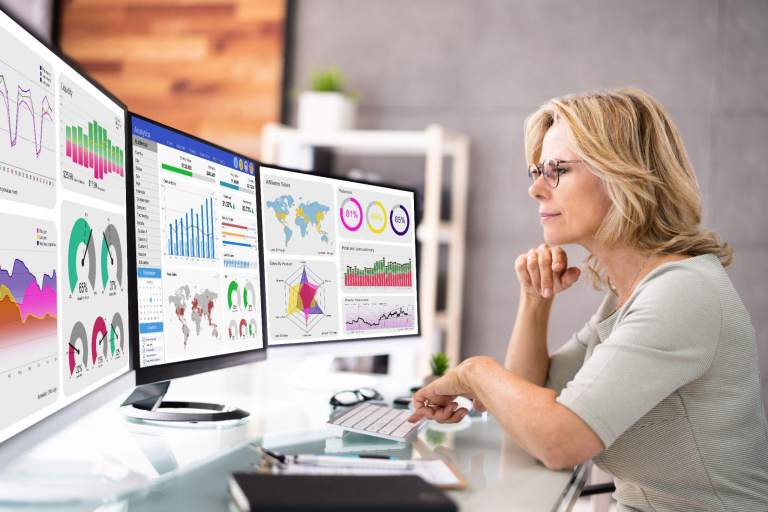
The insights generated are then presented in easy-to-understand dashboards, enabling executives and managers to make decisions with confidence. This makes predictive analytics accessible, not just for data scientists, but also for CFOs, COOs, and CEOs who need real-time guidance for critical decisions.
3.Predictive Analytics in Finance
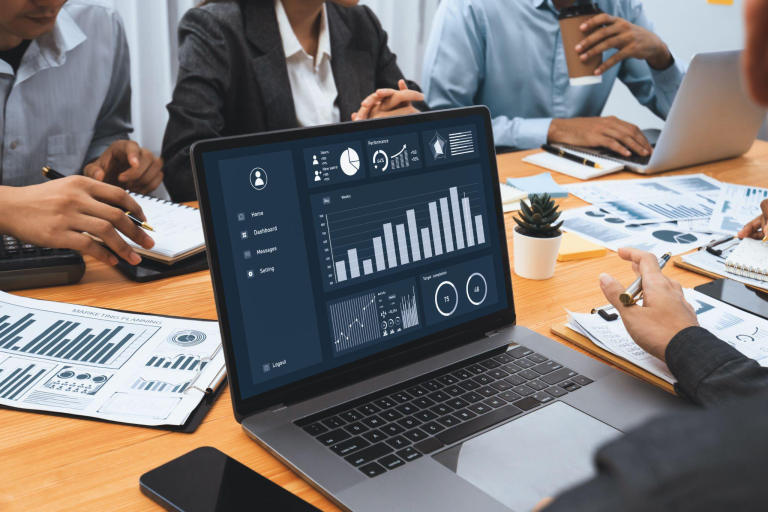
Finance departments are often the earliest adopters of predictive analytics because of its direct impact on cash flow, profitability, and strategic planning. Tools like Sage Intacct and Sage 300 integrate predictive capabilities that allow SMEs to forecast revenue, anticipate expenses, and model financial outcomes with far greater accuracy than spreadsheets.
For example, nonprofits running on tight budgets can benefit from predictive tools built into their ERP or accounting systems. A financial system for non-profits can use predictive analytics to project donation cycles, grant renewals, and program expenses, helping leaders allocate funds more effectively while maintaining compliance.
For Canadian SMEs, predictive finance means fewer surprises. By combining ERP data with predictive models, businesses can anticipate downturns, model “what-if” scenarios, and make proactive adjustments to strategy. Predictive analytics doesn’t just improve financial reporting; it redefines how finance teams add value to the broader organization.
4.Operational & Customer Insights
Beyond finance, predictive analytics is revolutionizing operations and customer strategy. For manufacturers and retailers, demand forecasting ensures they keep the right amount of stock, reducing waste while preventing stockouts. Predictive maintenance, powered by IoT and ERP data, allows companies to service equipment before it fails, minimizing costly downtime.
On the customer side, predictive analytics highlights which clients are most likely to churn, which marketing campaigns will perform best, and which products are likely to trend. Retailers, for example, use purchase history and demographic data to predict what customers will buy next. Service businesses can anticipate contract renewals or upsell opportunities.
For SMEs, this means that predictive analytics delivers more than just numbers. It translates into stronger customer relationships, leaner operations, and the ability to seize opportunities ahead of competitors. These capabilities position predictive analytics as a must-have in the digital toolkit for growth-focused businesses.
5.Infrastructure & IT Support
Implementing predictive analytics successfully requires more than just software; it requires a strong IT foundation. Clean, well-managed data is essential, as predictive models are only as accurate as the information they process. Cybersecurity also plays a critical role: sensitive financial and customer data must be protected against breaches.
This is where a managed IT services provider in Markham or other regions becomes invaluable. They ensure your systems are secure, networks are reliable, and integrations between ERP, HRMS, and analytics platforms run smoothly. Cloud infrastructure is particularly effective, allowing SMEs to scale their predictive models without massive upfront investment in servers and storage.
Microsys supports businesses by combining ERP solutions with IT management expertise, ensuring that predictive analytics doesn’t just produce insights but does so reliably and securely. With the right infrastructure in place, predictive analytics becomes a sustainable strategy rather than a one-off project.
6.Predictive Analytics & Leadership Decisions
The real strength of predictive analytics lies in how it empowers leadership teams. CFOs use it to forecast cash flow scenarios, CEOs use it to guide long-term growth, and HR leaders use it to anticipate hiring needs. By moving beyond backward-looking reports, leaders gain the foresight to act proactively.
For example, a retail CEO might use predictive analytics to identify the best regions for expansion, while a nonprofit board could use it to anticipate fundraising shortfalls. In both cases, predictive models provide leaders with data-backed confidence.
Working with a trusted Sage consultant in Toronto, businesses can integrate predictive tools directly into their ERP platforms like Sage Intacct. This ensures that predictive insights are not siloed but embedded into daily operations, helping executives make better decisions across finance, HR, operations, and customer engagement.
7.Choosing the Right Predictive Analytics Approach
Not every organization will adopt predictive analytics in the same way. Some will rely on ERP-integrated solutions like Sage Intacct, which offers built-in dashboards and financial forecasting tools. Others may opt for custom software development that aligns predictive models with their industry-specific workflows.
The right choice depends on business size, data maturity, and growth ambitions. Microsys helps SMEs evaluate whether ERP solutions or custom analytics software deliver the best ROI. In many cases, a hybrid approach works best, using ERP for financial forecasting while layering in custom dashboards for operations or customer insights.
Predictive analytics for business is no longer a futuristic concept; it’s an essential tool for any organization that wants to thrive in uncertain markets. By leveraging ERP data, HRMS insights, and operational analytics, predictive models give SMEs the ability to anticipate challenges, seize opportunities, and make smarter, more confident decisions.
At Microsys, we’ve seen firsthand how predictive analytics transforms decision-making for Canadian businesses. Whether it’s through ERP implementations like Sage Intacct and Sage 300, or through tailored custom software development, our goal is to ensure that predictive insights become part of your everyday strategy.
If you’re ready to put predictive analytics to work in your business, our team can help. Start your journey toward smarter decision-making by contacting us today.